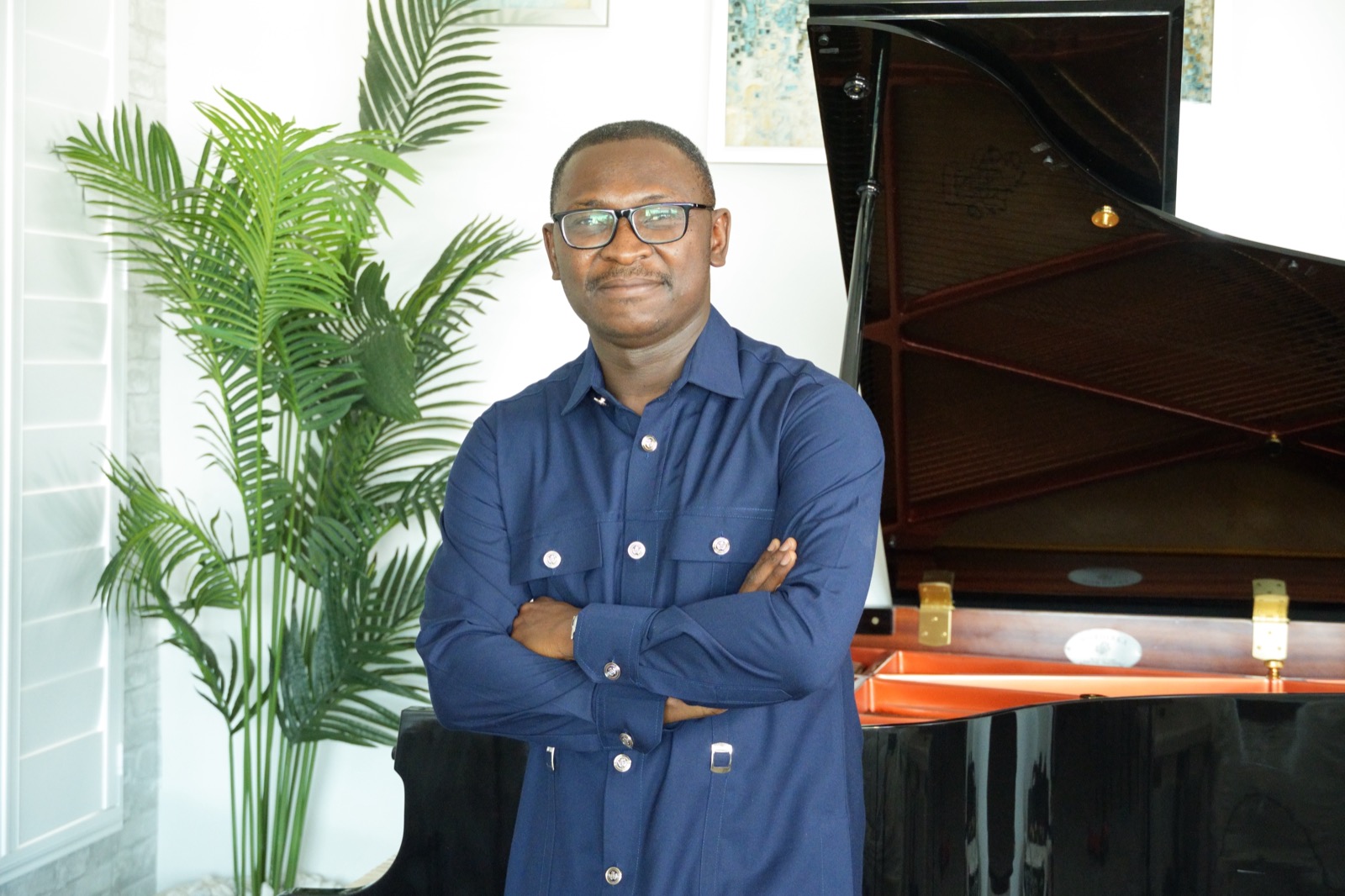
Before I ever wrote a note, I was a boy marching to class at primary school, singing a hymn I didn’t fully understand yet but somehow already trusted: In a little while we’re going home… let us sing a song that will cheer us by the way. I couldn’t have told you then why those words lodged themselves so deep. But they did. Decades later, whenever I find myself at my wit’s end, that line still returns to me — not as a memory, but as an instruction. Sing a song that will cheer you by the way. It has become something close to a personal creed, long before I knew it was one.
I was born into a home where music never really stopped. My grandfather played the accordion. My mother and every one of her siblings sang. My mother especially — she moved between Twi anthems and the classical hymn Jesus, Joy of Man’s Desiring as easily as breathing, singing whatever the moment called for. She never sat me down to teach me what made a melody beautiful. She simply lived inside beautiful melodies, all day, every day, and I absorbed the ear for it without either of us noticing it was happening. That is, I think, the quietest and most important inheritance a parent can give a child.
My father gave me something more deliberate. Returning home from peacekeeping duty in Lebanon, he brought back a Casio keyboard for me. It wasn’t a grand gesture explained with words — he simply put an instrument in my hands. Looking back now, I recognize it for what it was: my loved ones giving me, without ever calling it that, the gift of music itself.
“Nat, you are a composer”
For a long time, I thought of myself as someone who played and sang — not someone who wrote. That changed in one sentence.
I was at the piano, playing a tune I’d half-invented without thinking much of it, when Mr. Sam Asare-Bediako — a legend in Ghanaian choral music, someone I revered — stopped and asked whose composition it was. “Bishop, it’s just a random tune,” I told him, genuinely dismissive of it. He looked at me and said, simply: “Nat! You are a composer.”
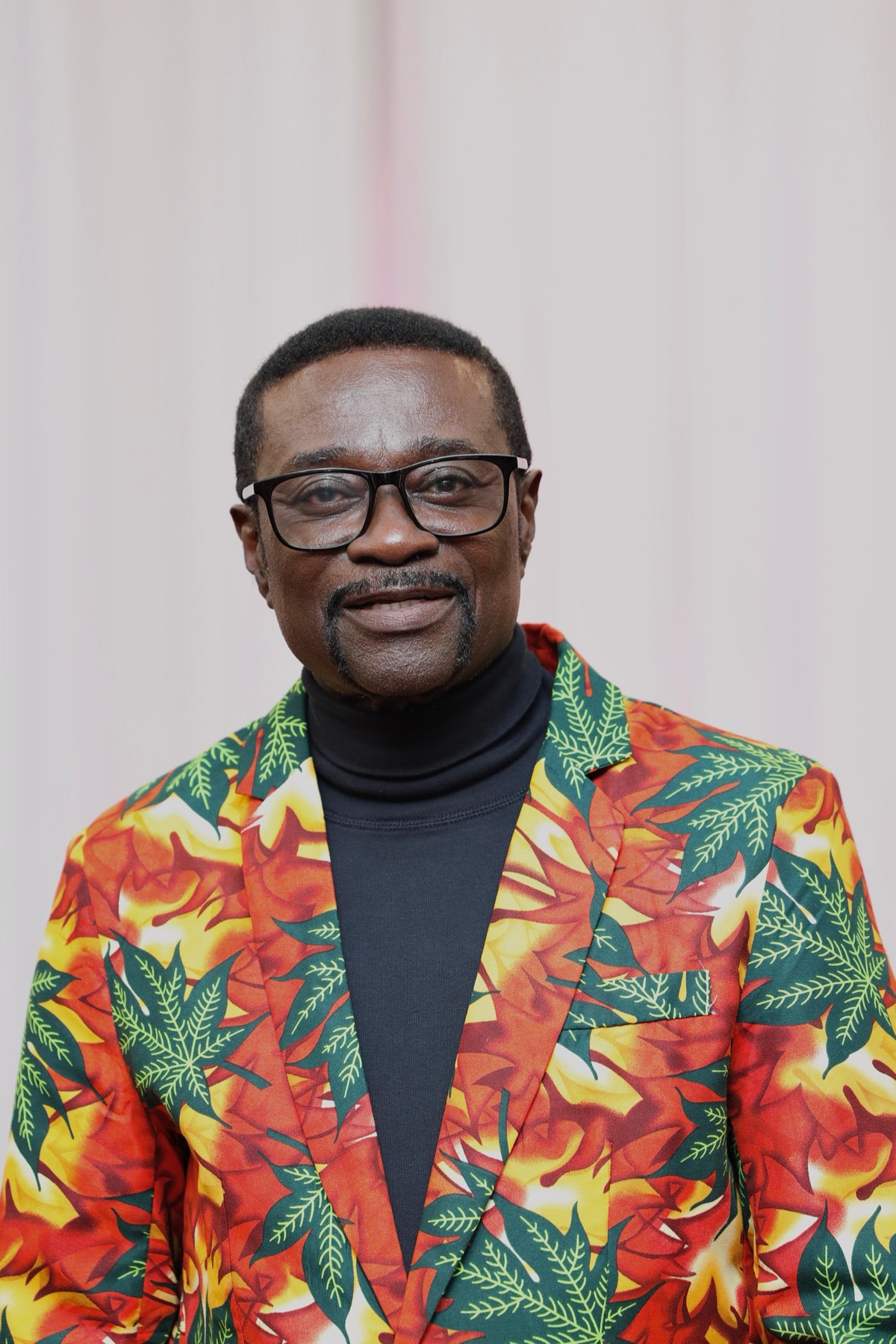
“Nat! You are a composer.”
I don’t think he knew, in that moment, what those five words would do. But that was the vote of confidence I didn’t know I was waiting for. From a man of his stature, it wasn’t flattery — it was a naming. And once he’d named it, I couldn’t go back to thinking of myself as merely a player of other people’s music. I decided, right there, that I would write.
The first songs
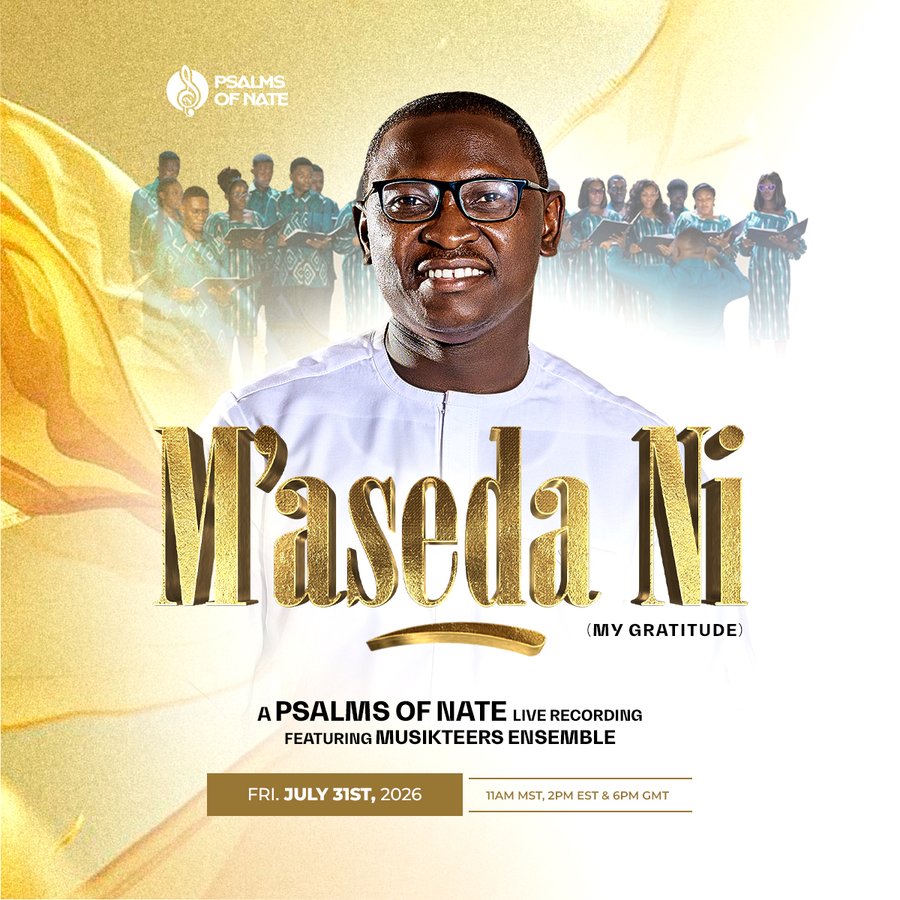
My first real composition, M’aseda Ni, came out of an assignment, not inspiration — Mr. Asare-Bediako had asked me to write something for an upcoming album launch. The melody didn’t arrive at a piano or a desk. It came to me while I was driving home after a night call, the kind of bone-tired hour when the mind goes quiet enough for something else to speak. I grabbed my phone and recorded it before it could disappear. When I later scored it and sent it to him for review, he applauded it. I cannot overstate what that felt like — to have your very first work called excellent by someone whose ear you trust more than your own.
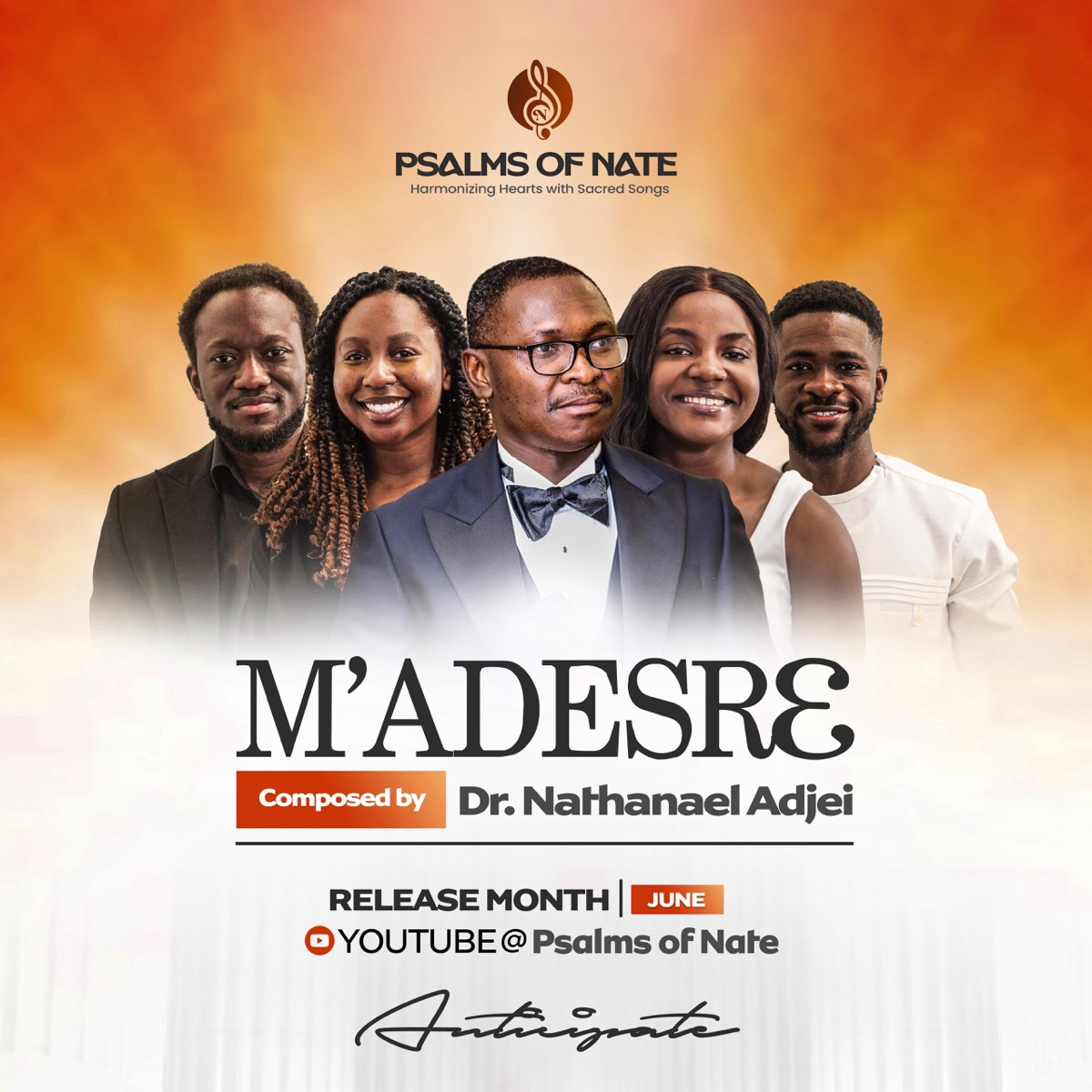
Madesrɛ arrived differently, and just as unexpectedly. It was a night after Sabbath, and sleep wouldn’t come. I sat at the piano and began playing with my right hand only, the way I had as a boy who could manage just one finger at a time — a kind of reaching back before I even knew that’s what I was doing. In the depth of that night, the melody came. I had been praying for a song — a prayer set to music — to give to a mentor who was walking through a difficult season and needed to be reminded that he was not alone in it. That prayer became a piece other people now sing.
Where medicine and music meet
I am a physician by training, and people sometimes ask how that squares with a life spent writing sacred choral music. I think of it this way: in Greek mythology, the same god presides over healing and over music. I have come to believe that’s not a coincidence but a description of something true. I write sacred tunes because I believe melody can do some of the same work as medicine — it can harmonize the heart and soothe the soul in places a prescription cannot reach.
Why Twi
I write mostly in Twi, and the reasons run deeper than habit. It is the language I grew up singing the most songs in — its rhythm carries a melodic quality even in ordinary speech, and that pulled me toward it long before I understood why. It is also, simply, my mother tongue, and I have come to feel that composing in it is a kind of stewardship — carrying forward something that was given to me rather than inventing something new.
I have also set myself a harder task: writing hymns that can be sung beautifully in either Twi or English, the same tune serving both tongues without compromise to either. It is ambitious, and I won’t claim to have mastered it — but I have succeeded a few times, and each success has felt like building a small bridge between two worlds that don’t often meet in a hymnal.
What I want, when someone hears my work, is for it to move through them in layers: first the melody, reaching them before they’ve decided anything; then the lyrics, moving them once they’ve understood the words; and finally, a kind of resolve — a hope that outlasts the song itself. I have tried, in whatever way I can, to be God’s merchant of hope.
The hard pieces, and the doubt
Not everything comes easily. Yɛmfa Aseda was the hardest anthem I have written, because I set out to do something beyond my usual reach — a full anthem in multiple movements, with real counterpoint, the kind of structural ambition that takes far longer to finish than it does to imagine.
And I would be dishonest if I said the doubt never comes. There have been seasons where I’ve questioned this calling entirely — where the imposter syndrome rears its head and asks, quietly, whether any of this is really mine to do. I have never fully answered that question. I have simply kept writing through it, which I’ve come to believe is its own kind of answer.
What has carried me through those seasons has been the people who believed in the music before I fully did — friends who offered their voices and their time to sing and record these songs so the world could hear them, without being asked twice.

Being carried further than I imagined
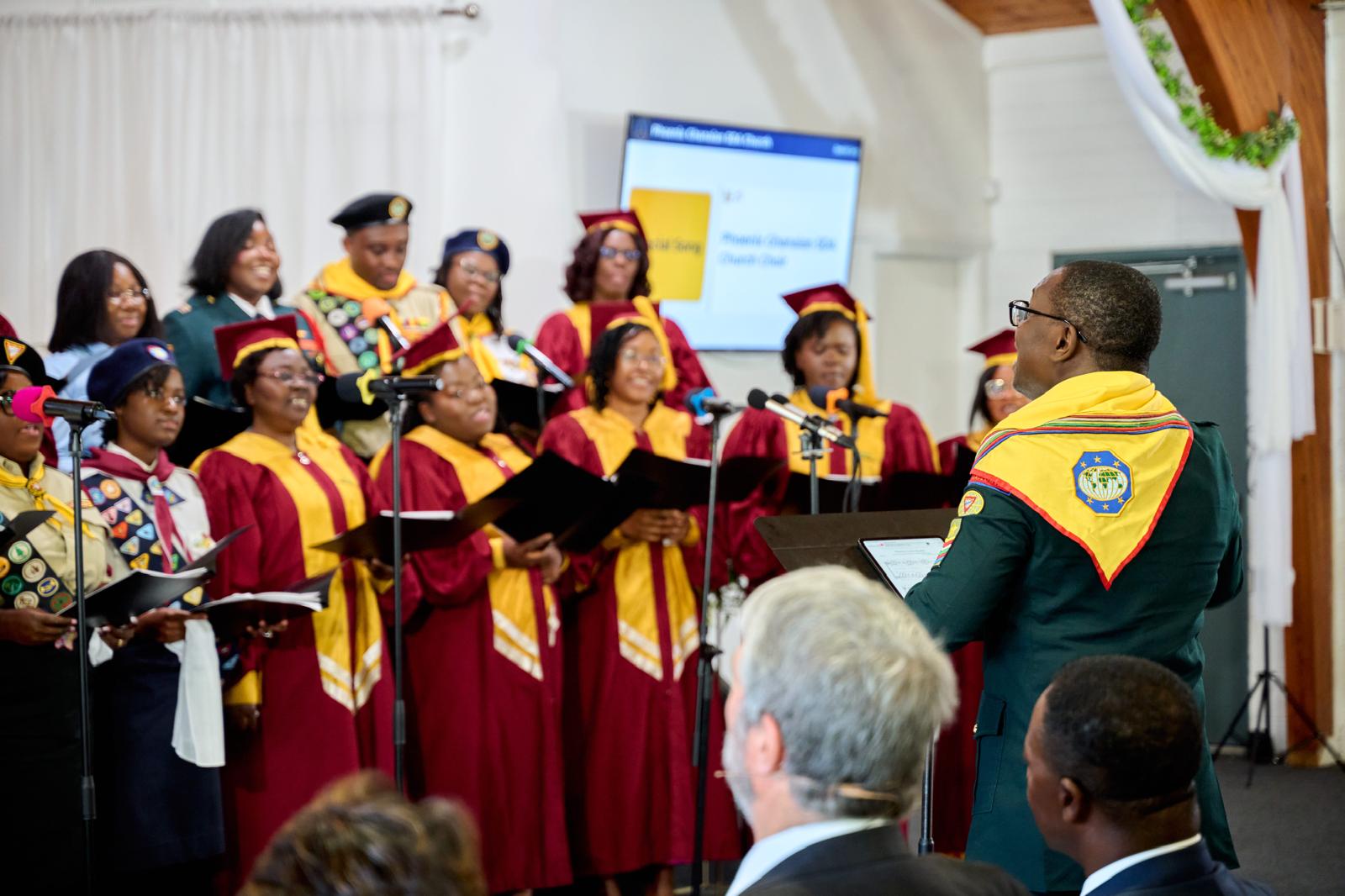
Working with Musikteers Ensemble GH changed how I understand my own compositions. Seeing a piece I wrote performed by a large choir taught me things about it I hadn’t known were there — how a song built for a big room breathes differently than one built for a small group, and how much a composition’s true shape only reveals itself in performance.
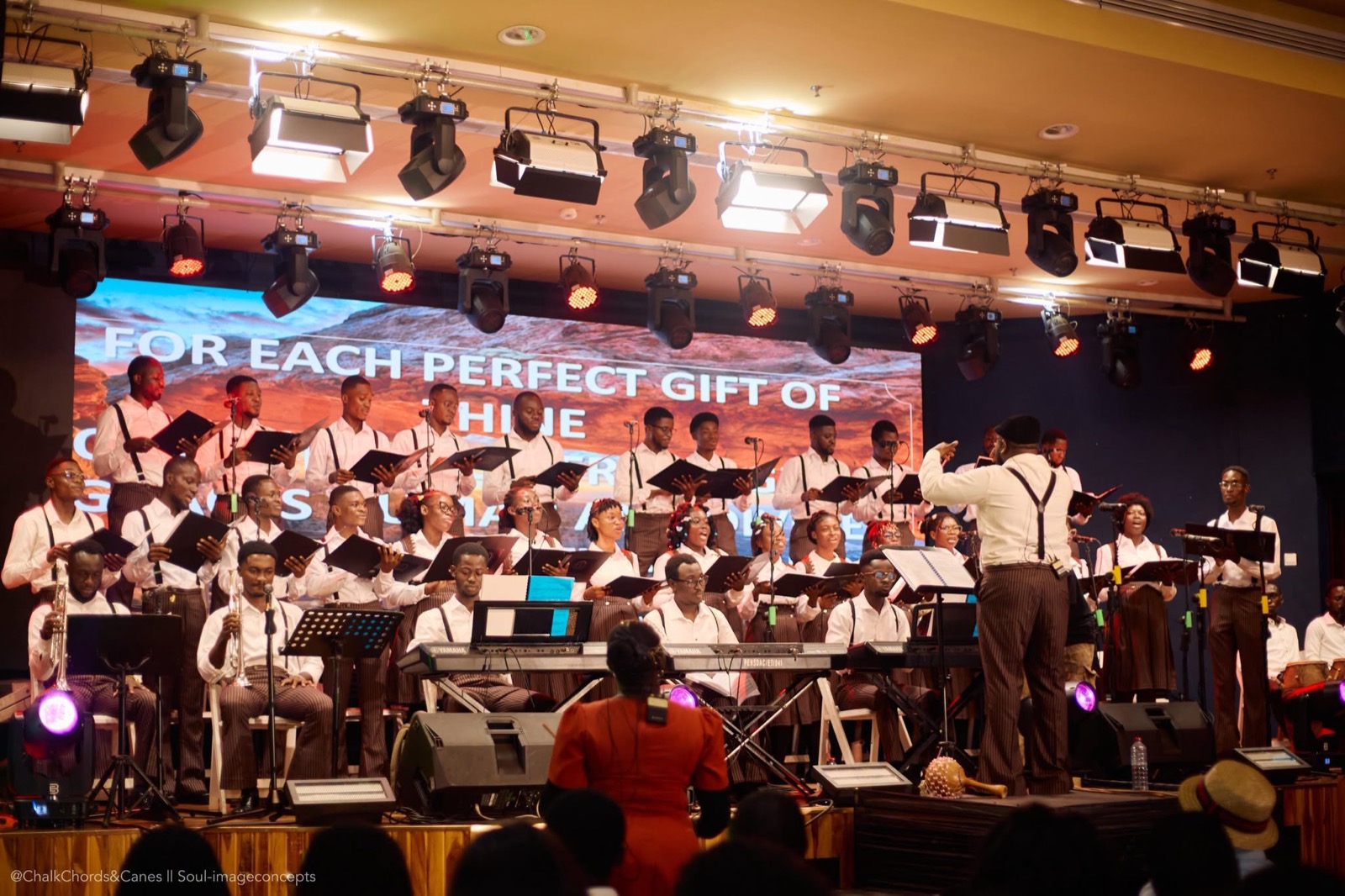
And then came Symphonials Ghana — one of the finest choral groups in the country — inviting me to record a live album with them. I think often about the distance between that invitation and the young man who used to give himself every excuse not to be a composer. It is one of the most humbling things that has happened to me, and I don’t take a day of it for granted.
What comes next, and what I hope outlasts me
A good next twelve months, to me, looks like this: a website with the full catalogue finally operational, serving the choral music community with the things it actually needs — full scores, rehearsal parts, edifying songs it can put to immediate use. And it looks like continuing to mentor others the way I was once mentored, by a legend who heard something in a random tune and decided to say so out loud.
And fifty years from now, if someone picks up one of my scores, I hope for one thing above all: that the same spirit which moved me to write the piece moves them, too — that it carries them past the beauty of its melody and its words into something more lasting. A reason to hope.